Blog Post Sample
Subversive Copyediting for UXers or: How I Learned to Stop Worrying and Love Subversion
So, you’re a UX writer learning how to copyedit? You’re in great company because we’ve got some useful advice for you!
UX writing is a new and bourgeoning field. So new, that often companies with UX departments don’t even have editors for their UX writers—forcing you to wear two hats. Fortunately, Carol Fisher Saller literally wrote the book on copyediting. So don’t sweat, this article has got some useful advice for anyone new to copyediting.
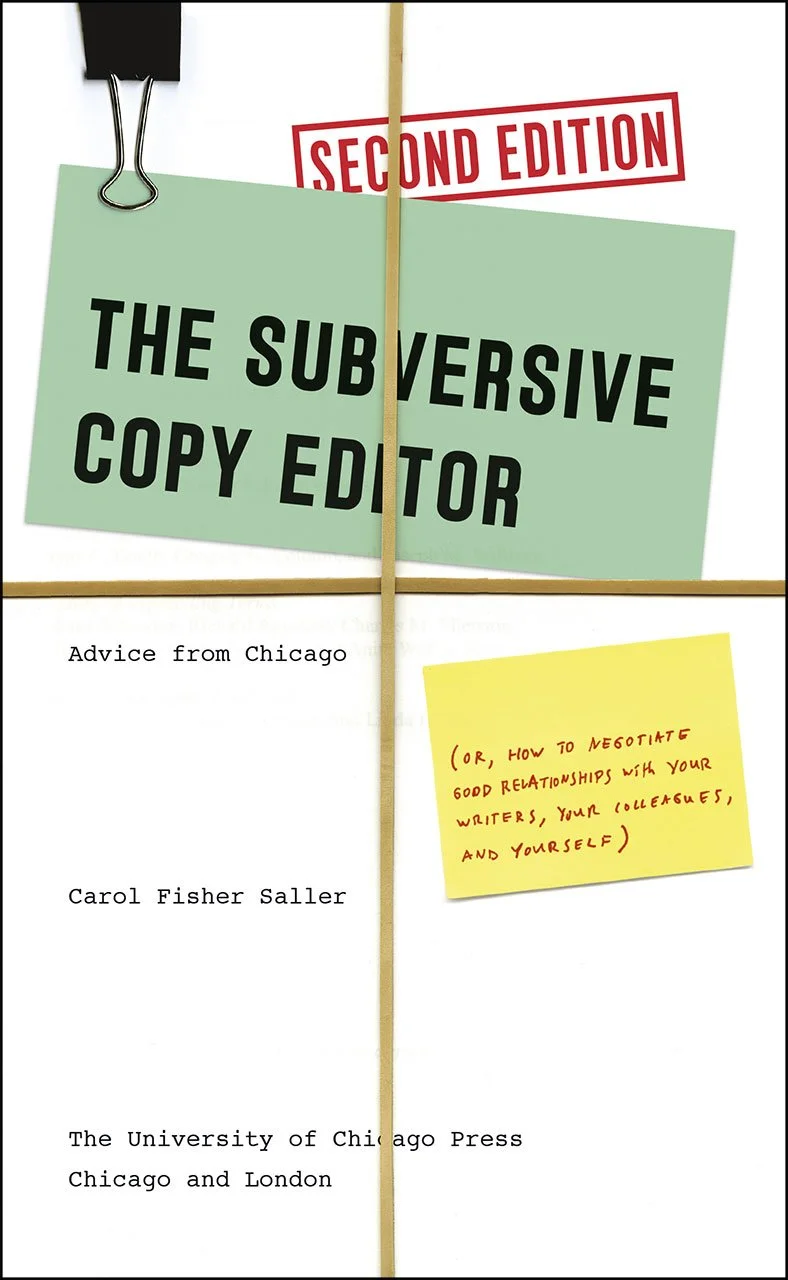
Saller wrote The Subversive Copyeditor; a book with a ton of valuable info for UX writers learning how to double as copyeditors. Saller was formerly the Editor of the Chicago Manual of Style Online Q&A, meaning she was faced with a lot of complicated questions from writers like you.
Here are some of the most important takeaways from the book:
1. The user is your priority.
In User Experience, user empathy is everything. Whether you’re editing the writing of a colleague or offering your perspective in critique, the user is always the priority. If your company or client has a persona (or personas), they represent your audience. Consider what your user needs and consider holistically if your writing partner is meeting their needs.
While it’s important that you stick with well-established rules of grammar when writing for general audiences, Saller warns of the “inexperienced editor.” An editor for whom “consistency trumps stylings that give a reader ease and confidence in the writer’s authority. These types are obsessed with imposing rules—sometimes rules that are closer to superstitions—that serve only to hamstring the writer and impoverish his prose.”
Writing to be understood is more important than imposing rules of style that don’t necessarily serve your user in their understanding. A more seasoned copyeditor knows the rules and knows when a writer is (or should be) breaking them for readability. So, when you’re editing the writing of a coworker, every edit you make, every word you strike should have a justification that links directly back to readability. Never should the justification be simply that “this is the rule”.
2. Consistency for consistency’s sake isn’t user-focused.
Rules on top of rules can get complicated. As Saller points out, “… for many writers and editors, our work is all about the rules… and we never once stop to ask whether logic and reason and the reader are served”.
There are two options when it comes to how to serve users in this way: we stick to the rules of style to be consistent for constancy’s sake, or we “acquire the power of knowing when to break a rule in order to help writers achieve great writing,” according to Saller. The latter is what she calls being “subversive”.
For UX writers and de facto UX copyeditors, writing is meant to be easily digestible. The moment rules of style create a challenge for readers, it’s the responsibility of UXers to engineer clarity into the experience. While it’s important to be flexible with your writers, a subversive copyeditor knows when rules ought to be broken for the benefit of the user. If something doesn’t sit right, look at the rules. If the rules are the reason for the lack of clarity, attempt to engineer a way out or around. If that’s not possible, push to break the rules in a way that you can defend to your writer and any other oversight.
3. Be flexible and communicative.
You can expect to disagree with your writing partner on any number of things. Maybe it’s whether to capitalize every word in the H1. Maybe it’s deciding if you should abbreviate March to “Mar.” based on the company style guide. Style guides are there to help your user by providing consistency and predictability. But sometimes, you must be flexible with your conventions.
Your company or client may have a purpose for seemingly ridiculous abbreviations that have something to do with back-end development. Maybe the oddity you recognize is related to some company-wide push over which you and your writer have no control.
Saller associates this flexibility with maintaining good relationships with your writing partners. Knowing when to fight against style conventions versus when to accept them is something you develop over time, but always being open to discussion will make these negotiations much more manageable.
Regardless of your skill level when it comes to copyediting, these tips offer a great jumping-off point. Now, get out there and start subverting!